
On the morning of March 15, 1910, the quiet, dry hills of Kern County, California, were shaken by a deafening roar that sounded like an approaching freight train. Deep beneath the surface near Midway-Sunset oilfield, an uncontrollable pressure surged up through a wooden derrick. Moments later, a black geyser of petroleum erupted over 200 feet into the air, raining crude oil down upon the landscape for miles around. The legend of the Lakeview Gusher was born.
The Lakeview Gusher remains the largest, most spectacular accidental oil spill in American history, yielding an estimated 9 million barrels of crude oil over the course of 18 months. But beyond the sheer scale of the eruption, this event epitomized the high-stakes, wild west spirit of the Great Kern County Oil Boom. It was an era defined by daring wildcatters, wooden derricks, technological ingenuity, and the rapid transformation of Bakersfield into the undisputed energy capital of California.
1. The Rise of the Kern County Wildcatters
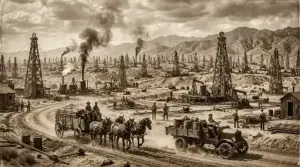 At the turn of the 20th century, Central California was undergoing a seismic industrial shift. Following the major 1899 discovery of oil along the banks of the Kern River, prospectors and investors flooded into Bakersfield. These independent oilmen, known affectionately and notoriously as “wildcatters,” were risk-takers willing to drill in uncharted territory in search of petroleum treasure.
Wildcatting in Kern County was not for the faint-hearted. Drilling in the early 1900s relied on steam-powered cable-tool rigs, heavy iron bits, and simple wooden derricks anchored to dry soil. Geologic mapping was still in its infancy, meaning wildcatters relied as much on intuition, luck, and proximity to natural asphalt seepages as they did on science.
Despite the immense financial risks, the reward was undeniable. Kern County sat atop vast petroleum reservoirs, and as automobile ownership skyrocketed across the nation, the demand for refined fuel made petroleum wildcatting one of the most lucrative pursuits in Western American history.
Suggested Link: Learn more about the historical timeline and geology of the Lakeview Gusher eruption.
2. The Birth of Lakeview No. 1: A Well Nobody Expected
The story of the Lakeview Gusher began unremarkably in late 1909 when the Lakeview Oil Company began drilling a exploratory well—designated Lakeview No. 1—between Taft and Maricopa. As drilling dragged on through the winter, costs mounted, and the well appeared to be a dry hole. Out of money and nearly out of hope, the struggling company sold a controlling interest to the Union Oil Company of California.
Union Oil’s veteran drillers took over the rig, continuing to push deeper into the earth. By mid-March 1910, the drill bit reached a depth of approximately 2,225 feet. The crew noticed gas pressure mounting rapidly, but nothing could have prepared them for what occurred next.
On March 15, the reservoir violently blew out. The sudden pressure blasted the heavy iron drilling tools out of the hole, destroyed the wooden derrick overhead, and sent a jet of thick, heavy crude oil roaring into the cloudless sky. The wildcatters had hit the jackpot, but they now faced a catastrophic challenge: how to capture a runaway river of petroleum.
3. The Battle to Contain a Petroleum River
In the first 24 hours alone, Lakeview No. 1 gushed an astounding 18,000 barrels of oil. Within a week, that number surged to over 90,000 barrels per day. The sheer volume was staggering; the well was producing more oil in a single day than entire oilfields produced in a month.
The immediate challenge for crew superintendents and local workers was containment. Oil was flowing downhill, threatening local watersheds, communities, and surrounding land. Hundreds of laborers, local ranchers, and volunteers were mobilized to fight the rising black tide.
To capture the runaway oil, workers engineered a massive effort using primitive technology:
- Sandbag Dikes: Crews constructed towering walls out of sandbags, creating makeshift earth-filled earthen dams and catch basins to trap millions of gallons of pooled oil.
- The “Lake” of Oil: The main containment basin swelled into a literal lake of petroleum, covering several acres, where pumps worked around the clock to draw off crude.
- Pipeline Rerouting: Union Oil hastily laid miles of temporary pipelines across the desert floor to transfer crude directly to storage tanks in San Luis Obispo and refinery facilities on the coast.
For 544 days, Lakeview No. 1 erupted continuously. It was not capped by human intervention; rather, on September 9, 1911, the bottom of the wellbore finally caved in under its own pressure, sealing the geological chamber beneath and bringing the eruption to a natural end.
Suggested Link: Explore the American Oil & Gas Historical Society for vintage archives on historic American blowouts and booms.
4. Economic Boom and the Transformation of Bakersfield
The Lakeview Gusher put Kern County on the global map. During its 18-month run, the well produced roughly 9 million barrels of crude, of which nearly 5 million barrels were successfully salvaged and refined. The sudden flood of oil temporarily lowered West Coast oil prices, but it permanently cemented Kern County’s status as an industrial energy powerhouse.
Bakersfield quickly evolved from a pioneer supply town into a thriving regional metropolis. Boomtowns like Taft, Maricopa, and Oil City sprang up virtually overnight to house thousands of rig workers, engineers, teamsters, and entrepreneurs. Rail lines were expanded, machine shops multiplied along 19th Street, and commercial hotels filled with investors eager to purchase land deeds across the San Joaquin Valley.
The wealth generated during the era of wildcatting did not just stay in the oilfields; it built civic infrastructure, funded local schools, developed agricultural irrigation networks, and laid the foundation for the modern Bakersfield skyline.
Suggested Link: Visit Visit Bakersfield to explore local historic sites, museums, and oilfield heritage tours.
5. The Legacy of the Wildcat Era in Kern County
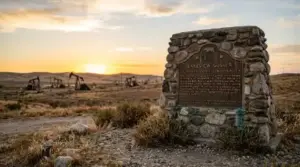
More than a century later, the era of the wildcatters and the Lakeview Gusher remains a central pillar of Bakersfield’s rich history. Today, California Historical Landmark No. 485 marks the site of the Lakeview Gusher near Highway 33, where visitors can still see the subtle depression left by the massive oil lake and taste the sulfurous air that defined the early boom days.
The wildcatting era taught early energy pioneers invaluable lessons in geology, reservoir pressure management, environmental containment, and drilling safety—advancements that laid the groundwork for modern petroleum engineering.
Conclusion: Remembering Bakersfield’s Industrial Roots
The Great Kern County Oil Boom was defined by bold ambitions, unpredictable geology, and monumental human effort. The story of the Lakeview Gusher reminds us of the rugged ingenuity that transformed a dry valley floor into an industrial titan. As we look back on the history of Bakersfield and Kern County, honoring the wildcatters and workers who braved the elements allows us to appreciate the deep energy roots that continue to nourish our community today.