Mention the history and culture of Bakersfield, California, to most people, and their minds immediately jump to the twang of a Fender Telecaster guitar, neon-lit honky-tonks, or the legendary Dust Bowl ballads of Buck Owens and Merle Haggard. While the Bakersfield Sound undeniably put Kern County on the international musical map, it represents only one brilliant thread in the region’s rich cultural tapestry.
Long before the first electric guitar was plugged in on 19th Street, a very different group of pioneers helped lay the foundation of Central California’s identity. Arriving with little more than iron determination, strong family bonds, and centuries of high-altitude agricultural tradition, Basque shepherds in Kern County played an indelible role in transforming rugged wilderness into a thriving community. Their enduring legacy lives on today in the architecture, family names, and famous family-style dining halls that make Bakersfield a world-renowned capital of Basque culture.
1. The Early Waves: From Pyrenees Peaks to San Joaquin Valleys
The story of the Basque people in Kern County begins in the mid-to-late 19th century. Originating from the Pyrenees mountain region straddling the border of northern Spain and southwestern France, the Basque (or Euskaldunak) are one of Europe’s oldest distinct ethnic groups, possessing a unique language—Euskara—unrelated to any other known Indo-European tongue.
Driven away from their homeland by political upheaval, economic hardship, and restrictive inheritance customs that left younger siblings without land, many young Basque men set sail for South America and the Western United States. The California Gold Rush of 1849 initially drew many Basque immigrants, but they quickly realized that a more dependable livelihood lay in animal husbandry rather than prospecting.
By the 1870s and 1880s, word spread back to European villages that the vast, open plains of the San Joaquin Valley and the surrounding Sierra Nevada mountains offered ideal winter pastures and summer grazing lands. Young Basque immigrants flooded into Kern County, eager to work as hired herders for established livestock outfits or to build herds of their own.
Suggested Link: Learn more about the history and heritage of Basque Americans in the Western United States.
2. A Solitary Life on the Open Range
The life of an early Basque sheep herder in Central California was defined by profound solitude, intense physical labor, and an intimate understanding of the landscape. Responsible for managing flocks numbering in the thousands, a shepherd spent months isolated in the remote wilderness of Kern County—from the dry alkali flats of the valley floor to the high-alpine meadows of the Tehachapi and Sierra Nevada mountain ranges.
Armed with a trusty rifle, a wooden staff, a canteen, and assisted by highly trained Pyrenean sheepdogs, these herders protected their stock from coyotes, mountain lions, and unpredictable weather events. Their living quarters were modest, often consisting of portable sheep wagons equipped with a small bed, stove, and basic supplies, or simple canvas tents during high-country summer moves.
Despite the lonely nature of the work, Basque herders earned a reputation among local ranchers and land companies for unmatched reliability, work ethic, and animal care skills. Through years of careful saving and frugal living, many hired herders eventually purchased their own livestock, transitioning from solitary laborers to prominent Kern County landowners and business operators.
3. Boarding Houses: The Anchors of Basque Community Life
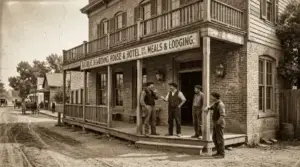
Because shepherds spent so many months isolated on the open range, the need for central gathering places became critical. This need birthed the famous Basque boarding houses (known as ostatuak), which sprang up around major railway hubs and agricultural trading centers—most notably in East Bakersfield (historically known as Kern City).
More than mere hotels, these boarding houses served as sanctuary, bank, employment agency, post office, and social hall all under one roof. When young herders arrived from Europe speaking no English, the boarding house owner (the etxekojaun) and his wife (the etxekoandrea) helped them open bank accounts, navigate local paperwork, and secure grazing contracts.
The boarding house was where herders returned during winter breaks to speak their native language, play traditional card games like Mus, practice handball (pelota) on custom-built courts, and share news from back home. Above all, it was where they gathered around massive communal tables to share hearty, home-cooked meals.
Suggested Link: Explore Visit Bakersfield to locate historic Basque restaurants and cultural landmarks across the city.
4. The Culinary Heritage: Family-Style Dining as a Local Tradition
The communal dining traditions developed in 19th-century boarding houses eventually evolved into one of Bakersfield’s most famous cultural exports: traditional family-style Basque dining. Designed to feed ravenous workers after long months on the range, these meals were renowned for their generous portions, rich flavors, and lively atmosphere.
Guests seated at long oilcloth-covered tables were served a continuous parade of courses, a ritual that remains largely unchanged in Bakersfield’s iconic historic eateries today:
- The Setup: Generous tureens of rich vegetable soup, fresh French bread, sweet butter, house-made salsa, and marinated beans (often referred to as “Basque beans”).
- The Salads and Entrees: Cold green salads alongside signature dishes such as pickled tongue, garlic-marinated fried chicken, oxtail stew, and lamb shanks cooked slowly with garlic and bell peppers.
- The Main Course: Thick, perfectly grilled ribeye steaks, lamb chops, or sweetbreads, heavily seasoned with roasted garlic.
- The Refreshments: CARAFES of house red wine, topped off with a glass of Picon Punch—a potent, traditional Basque-American cocktail made with Amer Picon (or Torani Amer), grenadine, club soda, brandy, and a twist of lemon peel.
Historic establishments like Pyrenees Café, Wool Growers, Noriega Hotel (which held a prestigious James Beard Foundation America’s Classics award), and Chalet Basque turned East Bakersfield into a premier culinary destination for locals, travelers, and food historians alike.
Suggested Link: Read about the James Beard Foundation and its recognition of historic American culinary institutions.
5. Preserving the Legacy for Future Generations
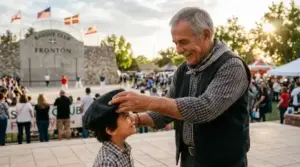
As the decades progressed, many Basque families shifted from open-range sheep raising into commercial cattle ranching, construction, local commerce, and civic leadership. Yet, despite modern modernization, the connection to their heritage remains deeply vibrant across Kern County.
Organized groups such as the Kern County Basque Club keep these traditions alive through annual festivals featuring traditional folk dancing (dantzariak), weight-lifting contests (herri kirolak), handball tournaments, and mass celebrations. The distinctive architecture of East Bakersfield, combined with street signs and historic markers, continues to remind residents of the immigrants who built a home far from the Pyrenees.
Conclusion: A Dynamic Cultural Tapestry
Bakersfield’s identity is multifaceted and rich. While the Bakersfield Sound gave voice to the working-class spirit of the mid-20th century, the Basque shepherds provided the steady perseverance and cultural richness that anchored Kern County a century prior. By looking beyond the guitars and exploring the stories of all who came before, we gain a deeper appreciation for the resilient, diverse community that defines Bakersfield today.