
1. The Untamed Delta: What Was Kern Island?
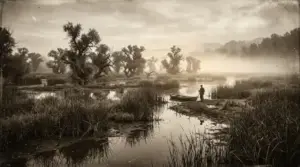
Before human intervention reshaped the valley floor, the Kern River flowed unchecked out of the Sierra Nevada mountains. Upon reaching the flat valley basin, the river spilled over its banks, creating a massive inland delta filled with swamps, lagoons, and seasonal lakes like Buena Vista and Kern Lake.
Between the primary river channel and a major southern slough lay a raised landmass enveloped by marshland. Early pioneers dubbed this swamp-surrounded land mass Kern Island. Covered in dense thickets of willow, cottonwood, and thick tule reeds, the island was home to swarms of mosquitoes, wild cattle, and grizzly bears.
While the land was swampy and prone to catastrophic spring flooding, early settlers recognized a hidden treasure: thousands of years of river silt had created some of the richest, deepest topsoil on the North American continent. The only challenge was taming the water.
2. Early Earthworks: Hand-Dug Ditches and Muscle Power
In the late 1860s, early pioneers like Colonel Thomas Baker, Thomas A. Lee, and Harvey Skiles realized that farming Kern Island required a dual strategy: draining the stagnant marshes while simultaneously diverting river water to cultivated fields.
Without heavy diesel machinery or modern surveyors, these early settlers relied on basic tools—mule-drawn slip scrapers, wooden plows, shovels, and simple spirit levels. Working in knee-deep mud under the scorching valley sun, crews of laborers dug the first primitive drainage ditches and irrigation canals.
The earliest major project was the construction of the Kern Island Canal. Designed to tap directly into the Kern River, this hand-excavated channel rerouted water away from natural swamps and directed it across elevated soil ridges, allowing gravity to distribute water across surrounding fields.
3. The Battle of Gravity and Floods
Engineering canal systems in a flat valley presented immense technical hurdles. If a canal was dug with too steep a slope, fast-moving water eroded the earthen banks and destroyed headgates. If the slope was too shallow, water stagnated, silt settled out, and the ditch choked on weeds.
Pioneer engineers had to master the delicate science of low-gradient water flow. They constructed wooden check dams, headgates, and flumes to regulate water speed and volume. However, nature repeatedly tested their designs:
- Spring Snowmelt Floods: Heavy Sierra Nevada snowpack runoffs frequently burst through hand-built levees, washing away months of hard labor in a single night.
- Summer Droughts: By late summer, the river’s flow dropped dramatically, requiring farmers to clear miles of weed-choked ditches to keep water moving.
Despite these setbacks, the settlers rebuilt after every flood, gradually refining their levees and canal banks into durable, long-term civil works.
4. The Miller & Lux Era and Legal Water Rights
By the 1870s and 1880s, individual farming efforts began blending into large-scale corporate engineering projects. Land titans like Henry Miller, Charles Lux, and James Ben Ali Haggin arrived in Kern County, bringing immense financial capital to build grand canal systems, headgate structures, and steam-powered dredges.
This massive expansion of canal networks also sparked the famous legal battle over water rights known as Lux v. Haggin. The landmark ruling shaped California’s complex combination of riparian and appropriative water rights, establishing legal frameworks that still govern California water distribution today.
To explore historical photos, land maps, and pioneer archives from Kern County’s early agricultural development, visit the Kern County Library Historical Research Center.
5. The Legacy of Kern Island’s Pioneer Engineers
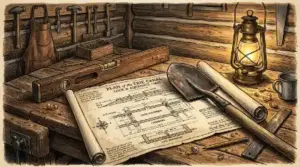
The reclamation of Kern Island stands as one of the most remarkable engineering feats of California’s pioneer era. Through vision and grueling physical effort, early settlers transformed a malaria-ridden swamp into the fertile heart of Bakersfield.
Many of the original canal routes dug by hand in the 1860s and 1870s—including the Kern Island Canal—remain active water channels today, flowing underneath modern city streets, parks, and residential neighborhoods. Every harvest produced in the valley stands as a living monument to the pioneering spirits who dared to reclaim the swamp.